

Introduction
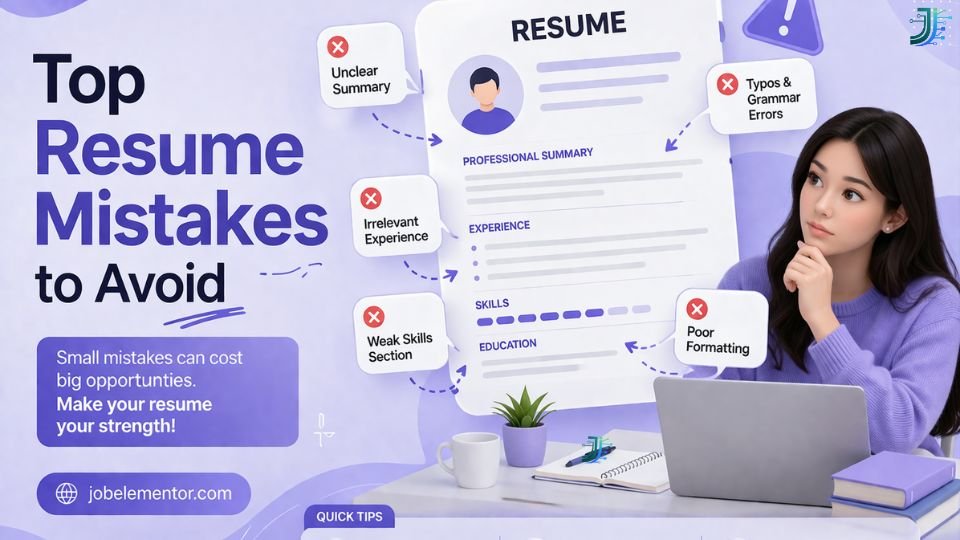
Your resume is the first impression you make on a potential employer. It plays a crucial role in determining whether you get shortlisted for an interview or rejected. Many job seekers, especially freshers, make simple but costly mistakes that reduce their chances of getting hired. Understanding these common resume mistakes and avoiding them can significantly improve your job application success. In this guide, we will explore the top resume mistakes to avoid and how to create a strong, professional resume.
Using a Generic Resume for Every Job
One of the biggest mistakes candidates make is sending the same resume to every job application. Employers are looking for candidates who match their specific requirements. A generic resume does not highlight relevant skills and experiences for a particular role.
Instead, you should customize your resume for each job. Carefully read the job description and include keywords and skills that match the role. Tailoring your resume shows that you have put effort into your application and increases your chances of getting noticed.
Lack of Clear Structure and Formatting
A poorly structured resume can make it difficult for recruiters to read and understand your information. If your resume is cluttered, unorganized, or inconsistent, it creates a negative impression.
Use a clean and professional format with clear headings such as Summary, Skills, Education, and Projects or Experience. Keep consistent font styles and sizes throughout the document. Use bullet points instead of long paragraphs to make your resume easy to scan.
A well-structured resume improves readability and ensures that important information is not missed.
Including Irrelevant Information
Many candidates include unnecessary details that are not relevant to the job. This can make your resume longer and distract the recruiter from important information.
Avoid adding irrelevant personal details, outdated skills, or unrelated experiences. Focus only on information that adds value to the job you are applying for.
For example, if you are applying for an IT job, highlight your technical skills, projects, and certifications rather than unrelated experiences.
Writing a Weak or No Career Summary
A career summary is a short introduction at the top of your resume that highlights your skills and goals. Many candidates either skip this section or write a weak summary.
A strong summary should clearly explain who you are, what skills you have, and what you are looking for. It should be concise and tailored to the job role.
A good summary can grab the recruiter’s attention and encourage them to read the rest of your resume.
Highlighting Responsibilities Instead of Achievements
Another common mistake is listing job responsibilities instead of achievements. Simply stating what you were supposed to do does not show your impact or value.
Instead, focus on what you achieved in your previous roles or projects. Use measurable results whenever possible.
For example, instead of saying “Responsible for managing a website,” you can say “Improved website performance by 30% through optimization techniques.” This makes your resume more powerful and results-oriented.
Spelling and Grammar Errors
Spelling and grammar mistakes can create a very negative impression. They show a lack of attention to detail and professionalism.
Always proofread your resume before submitting it. Use tools or ask someone else to review it. Even small errors can reduce your chances of getting shortlisted.
A clean, error-free resume reflects professionalism and improves your credibility.
Using an Unprofessional Email Address
Your email address is an important part of your resume. Using an unprofessional or inappropriate email ID can harm your image.
Always use a simple and professional email address, preferably with your name. Avoid using nicknames or random words.
A professional email address helps create a positive first impression.
Adding Too Much or Too Little Information
Finding the right balance of information is important. A resume that is too long may lose the recruiter’s interest, while a very short resume may not provide enough details.
For freshers, a one-page resume is usually sufficient. For experienced candidates, two pages are acceptable. Focus on quality over quantity.
Include only important and relevant details that highlight your skills and achievements.
Not Showcasing Skills Properly
Many candidates fail to clearly highlight their skills. Simply listing skills without context may not be effective.
Organize your skills into categories such as technical skills and soft skills. Mention tools, technologies, and languages you are familiar with.
If possible, support your skills with examples from projects or experiences. This makes your claims more credible.
Ignoring Keywords from Job Descriptions
Most companies use Applicant Tracking Systems (ATS) to filter resumes. If your resume does not include relevant keywords, it may not even reach the recruiter.
Carefully read the job description and include important keywords related to skills, tools, and roles. This increases your chances of passing the initial screening process.
However, avoid keyword stuffing. Use them naturally within your content.
Including Outdated or Incorrect Information
Providing outdated or incorrect information can create confusion and reduce your credibility. Make sure all details in your resume are accurate and up to date.
Update your skills, certifications, and experiences regularly. Remove any outdated information that is no longer relevant.
Keeping your resume updated ensures that it reflects your current capabilities.
Poor Presentation of Projects
For freshers, projects play a crucial role in showcasing skills. However, many candidates fail to present their projects effectively.
Instead of just listing project names, describe what you did, what technologies you used, and what results you achieved. Highlight your role and contributions clearly.
Well-presented projects can make a strong impact and compensate for lack of work experience.
Not Including Contact Information Clearly
Some candidates forget to include clear contact information or place it in hard-to-find sections. This can create problems for recruiters trying to contact you.
Always include your phone number, email address, and optionally your LinkedIn profile at the top of your resume. Make it easy for employers to reach you.
Using Fancy Designs Over Readability
While creative resumes may look attractive, they can sometimes reduce readability, especially in ATS systems. Overuse of colors, graphics, or unusual fonts can make your resume difficult to read.
Focus on a clean and simple design that highlights your content. Readability should always be your priority over design.
Conclusion
Avoiding common resume mistakes can significantly improve your chances of getting shortlisted for interviews. A strong resume should be clear, relevant, and well-structured.
Focus on customizing your resume, highlighting achievements, and maintaining professionalism. Pay attention to details such as formatting, grammar, and keywords.
Your resume is your personal marketing tool. By avoiding these mistakes and presenting yourself effectively, you can stand out from other candidates and increase your chances of landing your desired job.
