
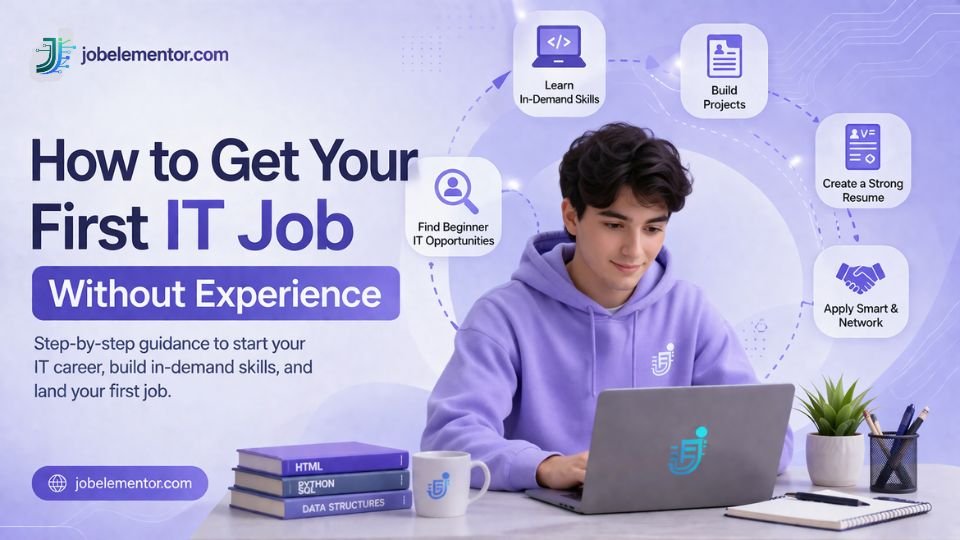

Introduction
Getting your first IT job without experience can feel difficult, especially when most job listings ask for prior experience. Many fresh graduates and beginners face this challenge and often feel stuck at the starting point of their careers. However, the truth is that it is completely possible to land your first IT job even if you don’t have formal work experience. With the right strategy, skills, and mindset, you can successfully enter the IT industry and build a strong career.
Understand What Employers Really Want
Before applying for jobs, it is important to understand what employers are actually looking for. Most companies do not expect freshers to have years of experience. Instead, they look for candidates who have basic technical knowledge, problem-solving skills, and a willingness to learn.
Employers value practical skills more than theoretical knowledge. They want to see whether you can apply what you have learned to real-world problems. This means your focus should be on building skills and showing proof of your abilities rather than worrying about experience.
Learn In-Demand IT Skills
The first step to getting an IT job is learning the right skills. Choose a specific field based on your interest such as web development, software development, data analysis, or cybersecurity.
For example, if you are interested in web development, you should learn HTML, CSS, JavaScript, and basic frameworks. If you prefer backend development, you can focus on PHP, Python, or Node.js. Learning databases like MySQL is also important.
Focus on mastering the basics first. Once you are comfortable, move on to advanced topics. There are many free and paid resources available online that can help you learn these skills effectively.
Build Real Projects
One of the best ways to compensate for lack of experience is by building real projects. Projects demonstrate your practical knowledge and show employers that you can actually do the work.
Start with simple projects such as a personal portfolio website, a to-do list application, or a basic CRUD system. Gradually move to more complex projects like a job portal, e-commerce website, or booking system.
Make sure your projects are complete and functional. Add features like user authentication, database integration, and responsive design. These projects will act as proof of your skills during job applications.
Create a Strong Portfolio
A portfolio is essential when you don’t have experience. It acts as your professional identity and showcases your work to potential employers.
Your portfolio should include your projects, skills, and a brief introduction about yourself. If possible, host your projects online so that recruiters can easily access them. Include links to your GitHub or other repositories where your code is available.
A well-organized portfolio increases your chances of getting noticed and shortlisted for interviews.
Contribute to Open Source
Contributing to open source projects is another great way to gain experience. It allows you to work on real-world projects and collaborate with other developers.
Even small contributions like fixing bugs or improving documentation can add value to your profile. Open source contributions also show that you are passionate about learning and improving your skills.
Apply for Internships First
If you are struggling to get a full-time job, start by applying for internships. Internships are easier to get and provide valuable industry experience.
Many companies hire interns and later convert them into full-time employees based on performance. Even if the internship is unpaid or low-paid, the experience you gain is highly valuable.
Internships help you understand workplace environments, improve your skills, and build confidence.
Optimize Your Resume
Your resume plays a crucial role in getting your first job. Since you don’t have experience, focus on highlighting your skills, projects, and achievements.
Keep your resume simple and clear. Include sections like technical skills, projects, education, and certifications. Describe your projects with details about what you built and what technologies you used.
Avoid adding unnecessary information. Make sure your resume is tailored to the job you are applying for.
Prepare for Interviews
Interview preparation is equally important. Once your resume gets shortlisted, you need to prove your knowledge and skills during the interview.
Prepare basic technical questions related to your field. Practice coding problems, understand fundamental concepts, and be ready to explain your projects in detail.
Also, prepare for common HR questions like “Tell me about yourself” and “Why should we hire you?” Confidence and communication skills play a big role in interviews.
Use Job Portals and Networking
Use job portals like your own platform jobelementor.com to apply for jobs and internships. Regularly check for new opportunities and apply consistently.
Networking is another powerful way to get job opportunities. Connect with professionals on LinkedIn, join developer communities, and participate in tech events or webinars.
Sometimes, referrals from connections can help you get interviews faster than applying online.
Be Consistent and Keep Improving
Getting your first IT job without experience takes time and effort. You may face rejections, but it is important to stay consistent and keep improving.
Learn from your mistakes, update your skills, and keep applying. Every rejection is a learning opportunity that brings you closer to success.
Consistency is the key. Even small daily improvements can lead to big results over time.
Common Mistakes to Avoid
Many beginners make mistakes that reduce their chances of getting hired. Avoid applying for jobs without having basic skills. Do not copy projects without understanding them.
Another common mistake is sending the same resume to every company. Always customize your resume based on the job role.
Lack of preparation is also a major issue. Make sure you are well-prepared before attending interviews.
Conclusion
Getting your first IT job without experience may seem challenging, but it is definitely achievable. Focus on learning the right skills, building projects, and creating a strong portfolio. Start with internships if needed and gradually move towards full-time roles.
Stay patient, keep learning, and never give up. With dedication and the right approach, you can successfully start your career in the IT industry.
